Infection Control: Sterilization and Disinfection Procedures at Mission Valley Dental Arts
Sterilization and disinfection procedures are critical for infection control processes at Mission Valley Dental Arts. These processes are done in accordance to recommendations provided by the Centers for Disease Control and Prevention (CDC). Using the recommendations as a guide, the methods of disinfection and sterilization can be learned and understood, which is important, especially during an outbreak such as COVID-19. We have been practicing "Universal Precautions" for over 40 years, meaning that we treat every patient as they have an infectious disease or virus.
Cleaning, disinfecting and sterilizing
Cleaning is an important infection control step that must take place before the sterilization and disinfection process begins. It involves the removal of blood, microorganisms, visible soil, proteins and other debris from surfaces, instruments and devices. This step is important to ready the items for safe handling and additional decontamination. Debris removal is completed using detergent and water, enzyme cleaner and water, or through a manual or mechanical process.
Disinfection is done to remove most of or all microbes, except bacterial spores. The process is completed with liquid chemicals to ensure infection control protocols are maintained. A disinfectant can be in the form of physical or chemical agent, and it cleans, disables and destroys pathogens on surfaces or items to a point where they are no longer able to transmit infectious agents, making the surface or item safe for use, handling or disposal. Sterilization is a process that removes all types of microbial life. We utilize UV sterilizers the same way that hospitals do for anything that cannot be heat sterilized.
Cleaning before disinfection
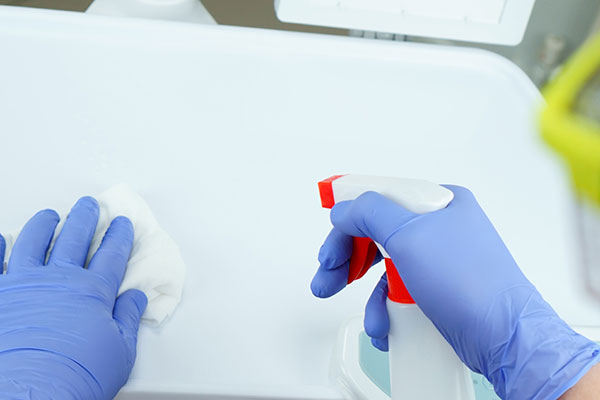
Surfaces are cleaned of debris before disinfection. It will be difficult to cover surfaces adequately with a disinfecting solution if surfaces still have dirt and debris. After cleaning the surfaces, a chemical disinfectant is applied for a recommended duration before wiping dry. The dental staff follows the instructions available on the product label and safety data sheet (SDS) for efficiency, safety and thorough disinfection.
Walls, floors and other housekeeping surfaces are cleaned with detergent or a disinfecting cleaner regularly. Disinfection is only done if the surfaces have been contaminated by blood or infectious material. Clinical contact surfaces such as dental units and countertops are disinfected with an EPA-registered surface disinfectant. In some cases, they are covered with a barrier and cleaned at the day’s end.
Handling instruments
Every contaminated dental instrument is transported to the central processing area inside a safe container. Disposable instruments, including needles, are recapped and handled safely according to the Occupational Safety and Health Administration guidelines. Disposable items designated for single-use, including saliva ejectors and suction tips should be used for only one patient to ensure infection control protocols.
Reusable instruments that contact the skin are cleaned and disinfected. They pass through the stages of cleaning, packaging and sterilization before reuse. Reusable instruments are cleaned with a hands-free, automatic cleaning device like an ultrasonic unit. When instant cleaning is not possible, the instruments are presoaked to make cleaning easier.
Every instrument is packaged before sterilization if it is not to be used immediately after. The package should stay sealed until the instrument is ready for use and should be stored properly to prevent contamination. Every critical and semi-critical instrument needs sterilization after each use to ensure that infection control protocols are maintained. Non-critical instruments do not require sterilization and can be cleaned with a surface disinfectant.
Infection control practices
For effective infection control, the sterilization and disinfection of surfaces, instruments and devices are done in accordance with CDC guidelines.
Request an appointment here: https://www.missionvalleydentalarts.com/ or call Mission Valley Dental Arts at (619) 805-4248 for an appointment in our San Diego office.
Check out what others are saying about our services on Yelp: Read our Yelp reviews.
Related Posts
An assessment for dental veneers can tell your dentist if you need these restorations. Veneers are customizable and thin. Each shell can correct mild to moderate dental issues. Here are the details to know when your dentist may suggest dental veneers.Even if other dental restorations can repair these mild types of damage, dental veneers are…
Find a dentist who can help you achieve good oral health despite your busy schedule. Flexible scheduling is for individuals who need to juggle many responsibilities in life. Finding the right practice to work with you is easy if you know what to look for. Below are the features you can enjoy when you find…
Dental veneers are quick and easy restorations. These thin shells can cover the front part of the teeth. Dental damage and discoloration can go away. You can even gain more strength from this extra layer of protection. Knowing which one can fit you the most can help you decide with your dentist on consultation day.…
You may need to find a dentist after relocating or if you are not satisfied with your current provider. For most families, the ideal general dentist welcomes restless toddlers and busy professionals alike, so every member of your family can get their dental needs met at the same place.Steps that a patient should take in…